|
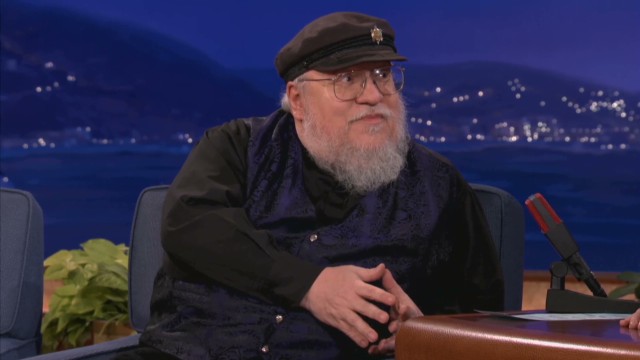
| 'Game of Thrones' author George R.R. Martin: Why he wrote The Red Wedding |
EW.com) -- Millions of "Game of Thrones" fans are feeling sadness, outrage, and, sure, some perverse excitement after watching Sunday's episode titled "The Rains of Castamere." But for Game of Thrones author George R.R. Martin, such reactions to "The Red Wedding" are nothing new. Martin has been receiving exclamatory emails about the disastrous Tully-Frey union for more than a decade, ever since he published his Song of Ice and Fire saga's third novel, A Storm of Swords. Below, the author reveals why Robb had to die, gives his reaction to upset readers and spills the scene's horrifying real-life inspiration.
ENTERTAINMENT WEEKLY: How early in the process of writing the book series did you know you were gonna kill off Robb and Catelyn?
George R.R. Martin: I knew it almost from the beginning. Not the first day, but very soon. I've said in many interviews that I like my fiction to be unpredictable. I like there to be considerable suspense. I killed Ned in the first book and it shocked a lot of people. I killed Ned because everybody thinks he's the hero and that, sure, he's going to get into trouble, but then he'll somehow get out of it. The next predictable thing is to think his eldest son is going to rise up and avenge his father. And everybody is going to expect that. So immediately [killing Robb] became the next thing I had to do.
Since Song of Ice and Fire so often subverts reader expectations and avoids traditional fantasy storytelling structures, should fans have any real hope that this tale will have a happy ending? As The Boy recently said on Thrones, "If you think this has a happy ending, you haven't been paying attention."
I've stated numerous times that I anticipate a bittersweet ending.
EW: What sort of reactions have you received from readers over the years about the scene?
Extreme. Both positive and negative. That was the hardest scene I've ever had to write. It's two-thirds of the way through the book, but I skipped over it when I came to it. So the entire book was done and there was still that one chapter left. Then I wrote it. It was like murdering two of your children. I try to make the readers feel they've lived the events of the book. Just as you grieve if a friend is killed, you should grieve if a fictional character is killed. You should care. If somebody dies and you just go get more popcorn, it's a superficial experience isn't it?
EW: Why do you think it has such a powerful reaction? Robb wasn't one of your "viewpoint characters" in the books and Catelyn wasn't really a beloved personality.
[Long pause] That's an interesting question. I don't know if I have a good answer. Maybe the way I did it. There's a certain amount of foreboding leading up to it. It's a betrayal. It comes out of left field. It's at a wedding feast. Robb has made his peace and you think the worst is over. Then it comes out of nowhere. There's also secondary characters killed. Then outside hundreds of Stark people are killed. It's not just two people.
To me, that Robb and Catelyn are family makes it worse. And Catelyn has suffered so much and lost so many people around her, and she actually thinks she's lost more than she really has (since she doesn't know for sure that Arya, Bran and Rickon are alive). Then this happens.
She also has the moment there to plead. There's also her murdering the hostage. He's not a son that Frey particularly values.* So in the end her bluff is empty. And she does. She carries through. There's a certain power to that too.
EW: I'm pretty sure I know the answer to this, but: Have you ever regretted the scene?
Martin: No. Not as a writer. It's probably the most powerful scene in the books. It cost me some readers, but gained me many more. It's going to be hard for me to watch it [on the show]. It's going to be a tough night. Because I love these characters too. And in a TV show you get to know the actors. You're also ending that relationship with an actor that you have affection for. Richard Madden and Michelle Fairley have done an amazing job.
EW: What do you say to readers who are upset about the scene?
It depends on what they say. What can you say to someone who says they'll never read your book again? People read books for different reasons. I respect that. Some read for comfort. And some of my former readers have said their life is hard, their mother is sick, their dog died, and they read fiction to escape. They don't want to get hit in the mouth with something horrible. And you read that certain kind of fiction where the guy will always get the girl and the good guys win and it reaffirms to you that life is fair. We all want that at times. There's a certain vicarious release to that. So I'm not dismissive of people who want that. But that's not the kind of fiction I write, in most cases. It's certainly not what Ice and Fire is. It tries to be more realistic about what life is. It has joy, but it also had pain and fear. I think the best fiction captures life in all its light and darkness.
One of my favorite elements of the scene is you introduce this idea of "salt and bread." We accept that as readers — Okay, in this fantasy world, people don't harm each other once they eat a host's bread and salt in their home. Then you break your own rule. It's like you're smacking the reader upside the head for being so dense — "Of course they're not going to follow that silly rule ALL the time!"
It was stolen from history. Hospitality laws were real in Dark Ages society. A host and guest were not allowed to harm each other even if they were enemies. By violating that law, the phrase is, they "condemn themselves for all time."
EW: What about the Red Wedding itself? Is that based on history too?
The Red Wedding is based on a couple real events from Scottish history. One was a case called The Black Dinner. The king of Scotland was fighting the Black Douglas clan. He reached out to make peace. He offered the young Earl of Douglas safe passage. He came to Edinburgh Castle and had a great feast. Then at the end of the feast, [the king's men] started pounding on a single drum. They brought out a covered plate and put it in front of the Earl and revealed it was the head of a black boar — the symbol of death. And as soon as he saw it, he knew what it meant. They dragged them out and put them to death in the courtyard. The larger instance was the Glencoe Massacre. Clan MacDonald stayed with the Campbell clan overnight and the laws of hospitality supposedly applied. But the Campbells arose and started butchering every MacDonald they could get their hands on. No matter how much I make up, there's stuff in history that's just as bad, or worse.
news sours
edition.cnn.com